
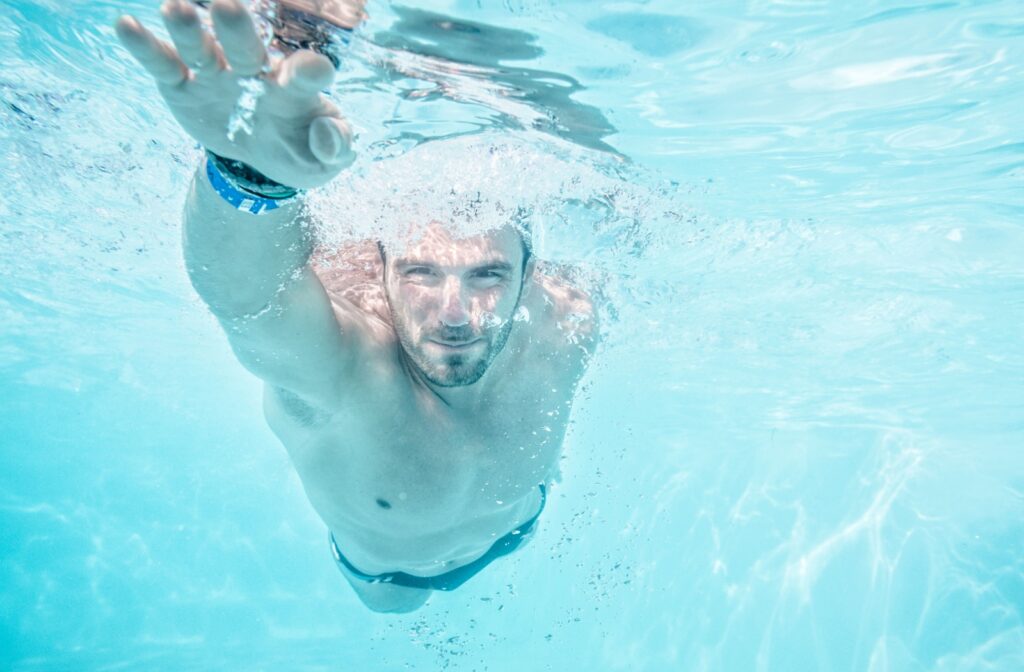
You’re ready for a refreshing swim at the pool or a fun day at the beach, but then you remember your contact lenses. You wonder whether wearing your lenses underwater might impact long-term eye health.
Opening your eyes underwater while wearing contact lenses puts you at risk of exposure to harmful microorganisms. This can lead to serious eye infections. Your contacts can act like sponges, absorbing bacteria and chemicals from the water and holding them directly against your eye.
The Risks of Water & Contact Lenses
Water may look clean, but it can still pose problems for your eyes, especially when you wear contact lenses. This is because soft contacts are porous and absorb what’s around them.
Harmful Microorganisms in Water
All water sources, from pools and oceans to tap water and lakes, contain tiny organisms. These microbes can stick to your contact lenses, where they may get trapped against the surface of your eye. This can lead to irritation or an infection.
Potential Eye Infections
One of the most serious risks is an infection called acanthamoeba keratitis. This infection is rare, but it can cause considerable damage to your cornea. Exposure to water while wearing your contacts increases this risk.
How Contacts Absorb Water
When you expose soft contacts to water, they can change their shape and tighten on your eye. They can also absorb chemicals like chlorine from a pool. This can cause discomfort, blurry vision, and even scratches on your cornea.
Pools, Oceans, & Showers
Different types of water present different challenges for contact lens wearers. Whether you’re enjoying a vacation or just enjoying time at home, it helps to understand what you’re up against. Here’s a look at common water environments.
Chlorine & Your Contacts
Pool water contains chlorine and other chemicals to reduce germs. These chemicals can also be absorbed by your lenses. This often leads to eye irritation and dryness long after you’ve left the pool.
Saltwater, Sand, & Discomfort
Opening your eyes in the ocean with contacts can cause irritation from both salt and sand. It’s also much easier to lose a lens in the waves.
Tap Water Dangers at Home
Even the water from your faucet at home isn’t sterile, so it isn’t safe for lenses. It’s good practice to remove your contacts before you hop in the shower or wash your face.
Symptoms of a Water-Related Eye Problem
If you accidentally expose your contacts to water, pay close attention to how your eyes look and feel afterward. Recognizing the signs of a potential problem can help you get the care you need.
It’s a good idea to connect with your eye doctor in La Quinta if you experience any of these symptoms:
- Eye pain or redness
- Blurry vision
- Increased sensitivity to light
- The feeling that something is in your eye
- Watery eyes or excessive tearing
Safer Options for Clear Vision in the Water
So, without contact lenses, how can you see clearly while swimming? There are actually a few possible options:
Prescription Swimming Goggles
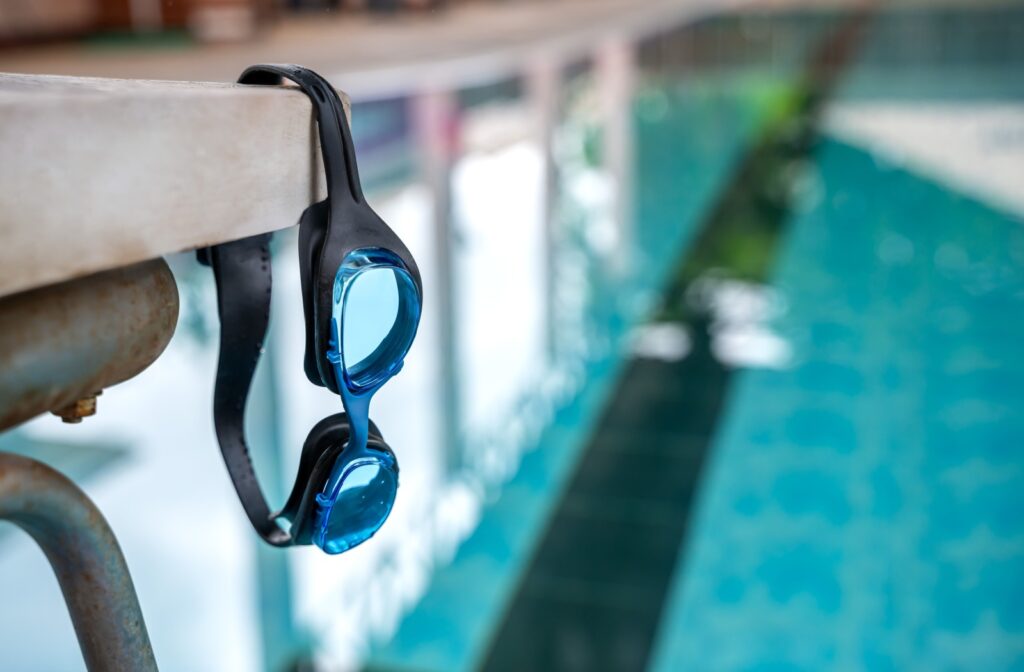
Prescription goggles are an excellent choice for swimmers. These goggles keep water away from your eyes entirely, while also providing clear vision. This lets you swim with confidence and comfort without risking your eye health.
Daily Disposable Lenses with Caution
If you feel you must wear contacts, some people opt for daily disposable lenses paired with tight-fitting swimming goggles. The idea is to throw the lenses away immediately after you leave the water. This approach still carries some (though greatly reduced) risk.
Protect Your Vision After Exposure & Beyond
Accidents happen! Maybe you forgot to take your contacts out, or maybe you got splashed in the face. If this occurs, don’t panic. A few simple steps can help protect your eyes from potential harm:
- Carefully remove your contact lenses as soon as you can with clean, dry hands.
- Throw the lenses away, even if they’re new—it’s not worth the risk to clean and reuse them.
- Rinse your eyes with a sterile saline solution.
- Monitor your eyes for any signs of infection or irritation over the next few days.
Preventative care is a key part of your overall health, and regular visits to an eye doctor can help keep your eyes healthy. An annual exam allows your doctor to check for changes in your eye health and vision.
At Total Vision La Quinta, we believe in proactive eye care that fits your life. If you have questions about wearing contacts or need to find a vision solution for your favorite activities, we’re here to help. Schedule a visit with us to discuss your eye health needs today.