


You probably think about how your environment affects your skin or your breathing, but what about your eyes? The team at Total Vision La Quinta knows that from a bright, sunny day to a windy afternoon, your surroundings play a significant role in how your eyes feel and function.
The environment can affect your eye health through sun exposure, air quality, weather patterns, and airborne particles, which can cause everything from temporary discomfort to long-term conditions. Understanding these factors and scheduling comprehensive eye exams can help you protect your vision for years to come.
The Sun’s Rays & Your Vision
That warm, sunny feeling is wonderful, but the sun’s ultraviolet (UV) rays can be tough on your eyes. Just as you protect your skin with sunscreen, your eyes need protection from UV rays with quality sunglasses, even on cloudy days.
Long-Term Effects of UV Exposure
Over time, unprotected exposure to UV light can contribute to several eye health issues. It’s a gradual process, but the effects add up. Think of it like a sunburn on your cornea. A short, intense exposure can cause painful, temporary vision loss called photokeratitis, while cumulative exposure gradually damages the sensitive structures inside your eye.
- Increases risk for cataracts
- Contributes to macular degeneration
- Damages the cornea over time
Poor Air Quality, Smoke, & Dust
Have you ever walked through a dusty room or sat near a campfire and noticed your eyes start to sting? Airborne irritants such as smog, smoke, and dust can cause immediate discomfort in your eyes. These particles can disrupt the tear film that protects your eye’s surface.
Your tear film is a thin, moist layer that keeps your eyes hydrated and your vision clear. When particles land on your eye, they can cause tiny breaks in this protective layer, leading to irritation and blurriness. Your eyes may produce more tears to flush irritants away.
What You Might Experience
When your eyes are exposed to poor air quality, you may notice some immediate and unpleasant symptoms. These signs are your eyes’ way of telling you they are irritated.
- A burning or stinging feeling
- Redness & watery eyes
- Blurry or unclear vision
Weather, Wind, & Temperature Changes
Your local climate directly affects your eye comfort. A gust of wind on a dry day isn’t just annoying—it can kick up debris and dry out your eyes, leaving them feeling gritty and sore. Large shifts in temperature and humidity can also throw your eyes off balance, leading to dry eye symptoms.
This applies to the outdoors as well. Indoor climate control, such as heaters in winter and air conditioning in summer, also removes moisture from the air. You might notice your eyes feel more strained or dry after a long day in an office or a car with the air conditioning blasting.
How Climate Affects Comfort
Whether it’s a hot, dry summer or a cold, windy winter, the weather can present unique challenges for your eyes. Staying aware of the conditions can help you anticipate and manage discomfort.
- Dry air can make eyes feel scratchy
- Wind blows debris into the eyes
- Heat can increase eye irritation
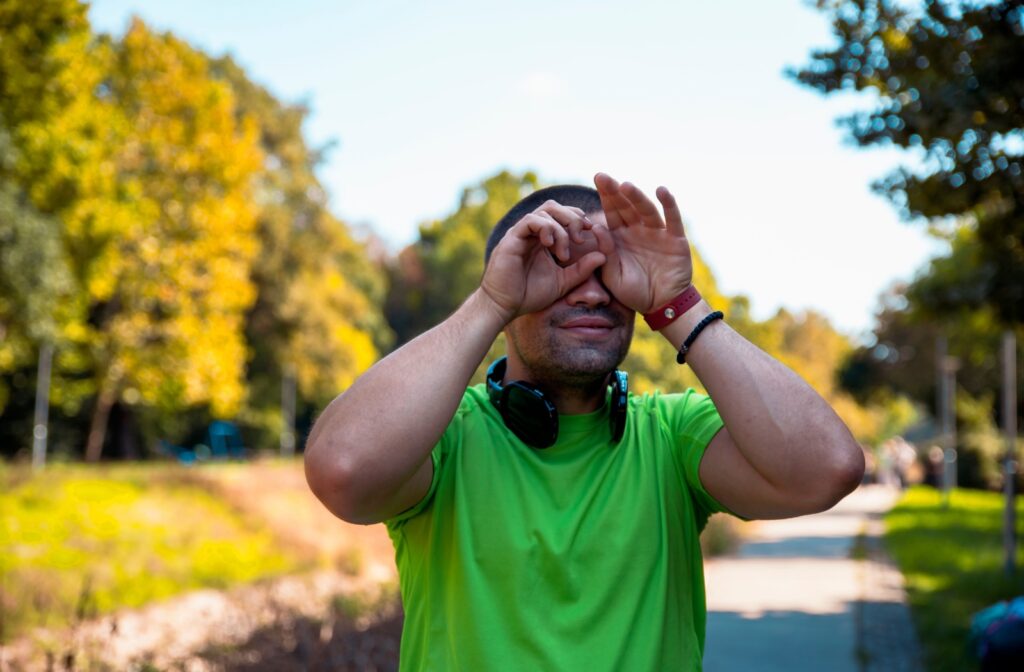
Environmental Triggers & Common Eye Symptoms
Sometimes it’s hard to tell what’s causing eye discomfort. You might just feel like your eyes are tired or strained. However, many common symptoms are directly linked to environmental triggers you encounter every day.
Signs Your Eyes Are Affected
If you regularly experience any of the following, your environment could be a contributing factor. Paying attention to these signals is the first step toward finding relief.
- Persistent dryness or grittiness
- Itching & redness, which can signal eye allergies
- Excessive watering or tearing
Protect Your Eyes & Get Professional Advice
You can take simple, proactive steps every day to shield your eyes from environmental stress. Creating good habits makes a real difference in your long-term eye health and daily comfort. When symptoms persist, professional guidance can help you find a clear path forward.
Daily Protective Habits
A few small adjustments to your routine can help defend your eyes against the elements. These simple actions can reduce irritation and protect your vision.
- Wear wrap-around sunglasses outdoors
- Use an air filter at home
- Stay hydrated with water
When to Talk to a Professional
While home care can help, some symptoms require closer review. An eye exam provides a comprehensive view of your eye health and helps identify the source of any issues.
During an exam, your eye doctor can look for subtle signs of sun damage, chronic dryness, or allergic reactions on the surface of your eyes, enabling them to recommend specific treatments beyond simple home remedies.
Protect Your Eye Health Today
Your vision is a vital part of how you experience the world. If you have concerns about how your environment is affecting your eyes, the team at Total Vision La Quinta is here to help. Schedule a visit to discuss your symptoms and get a clear look at your eye health.